The Dugan Building was built in 1877 by the Willimantic Linen Company as a one-and-a-half-story warehouse. After 1898, the Linen Company’s successor, the American Thread Company, added a second floor and converted the upper story into a headquarters for its American Fire Brigade, while continuing to use the first floor as a warehouse. Later, in the 1920s after the City of Willimantic had modernized its own municipal fire department, ATCO discontinued its own Fire Brigade and converted the second story into a meeting room. Later still, both stories were turned into office space, most notably for ATCO’s Engineering Department.
Jonathan Dugan purchased the entire American Thread Company’s Willimantic Mills complex shortly after ATCO closed down in 1985. Two years later, he donated both the Mill Museum’s main building and the smaller, brick Jonathan Dugan building (“Dugan Hall”) to the Mill Museum. Today, the Museum uses the first floor as an exhibit room to teach about the process of producing cotton thread and about working conditions in old-time mills.
Factory Floor
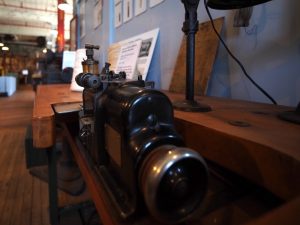
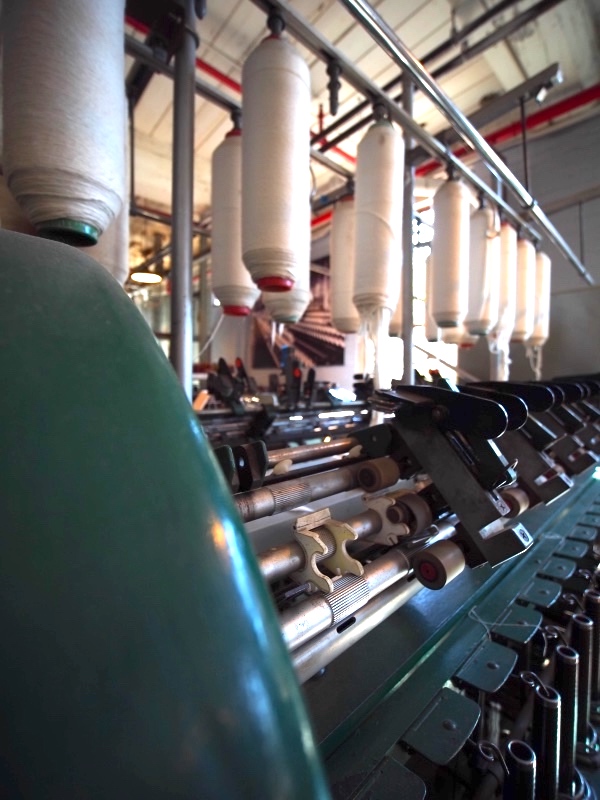
The Dugan Mill Factory Floor Exhibit contains textile machines from the 1830s through the 1960s. It features an 1890s carding machine, a 1950s spinning frame, various machine tools and hand tools, winding equipment, test equipment, weaving equipment, a print shop, and a collection of industrial sewing machines.
Print Shop
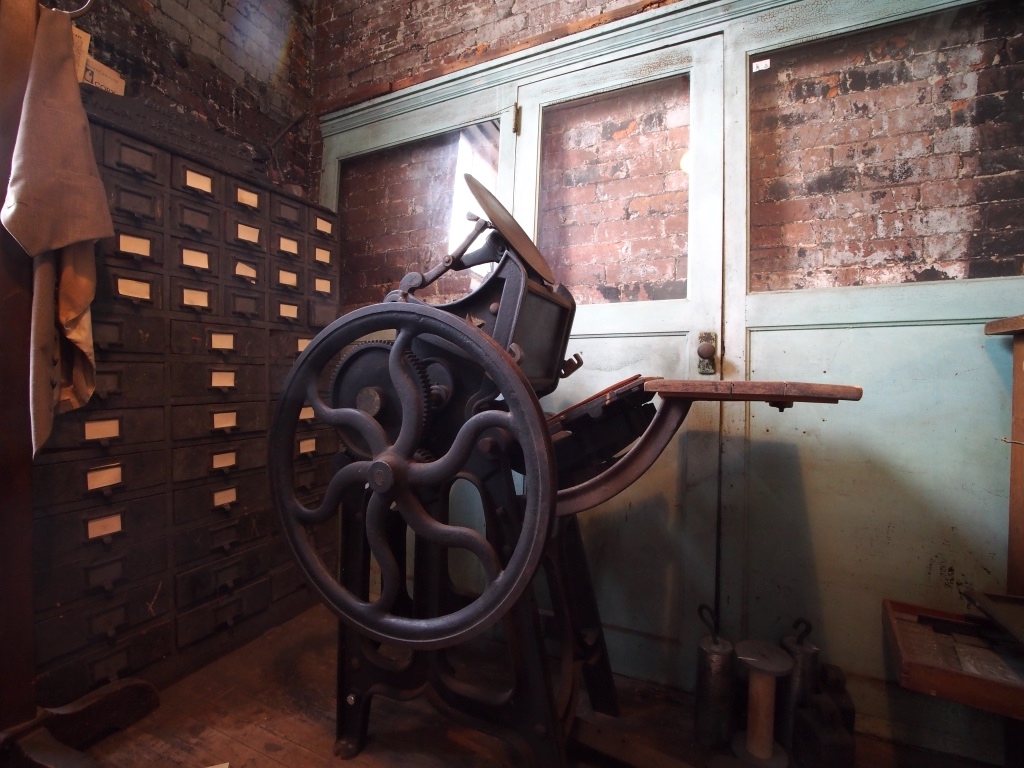
The Willimantic Linen Company and American Thread Company printed their own labels for shipping boxes, display packages, and thread spools. Keeping as much of the production line as possible in-house, a strategy known as vertical integration, saved on expenses. To illustrate this, the Museum set up a Print Shop Exhibit in one corner of the Factory Floor Exhibit in Dugan Hall. This exhibit includes many printing plates that were used in printing labels for spools, boxes, and other material at the factory.
Overseer’s Office
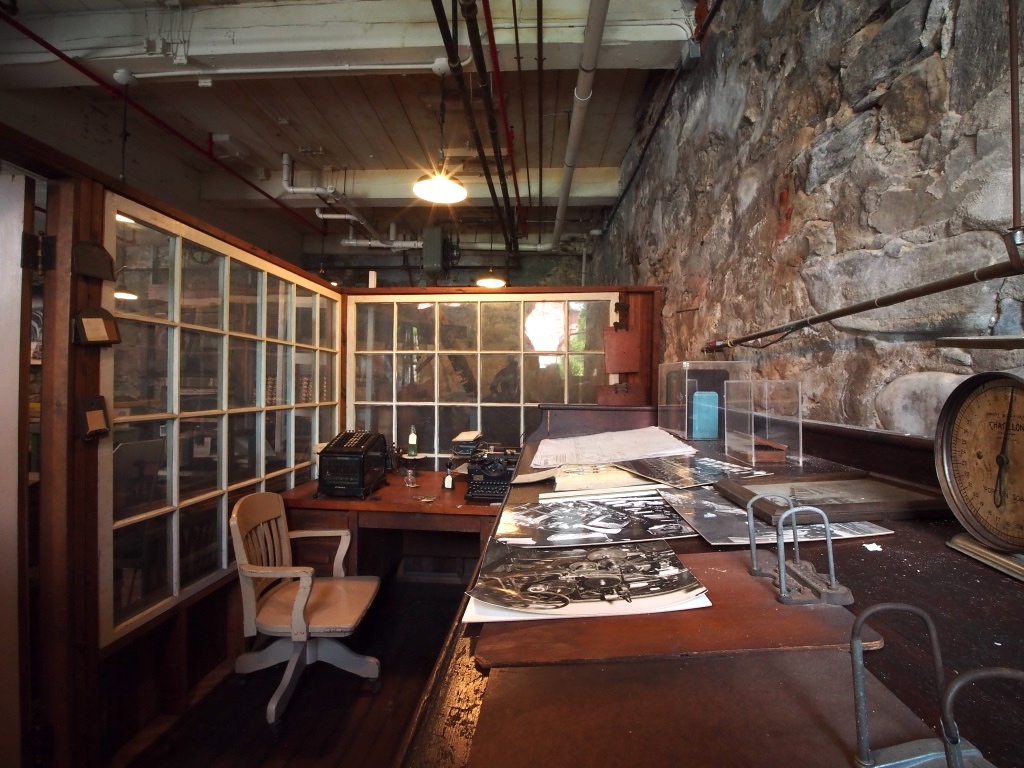
Overseers managed the workers in each workspace. Most factory floors had an overseer’s office located at one end of each big production room. The offices had glass walls, so that the overseers could watch over the workers from the comfort (and relative quiet) of their office. One common source of friction: for many years overseers often were from different ethnic backgrounds than the majority of the factory hands on their floor, or were men supervising a majority female workforce. At the Mill Museum, we set up an Overseer’s Office Exhibit at one end of the Factory Floor Exhibit in Dugan Hall. This office is used to also display engineering-related artifacts.