In 2025, the Mill Museum renovated its main exhibit room, the Bev York Room. We laid new carpeting, repainted the walls and ceiling, built partitions, and re-lit the whole space. “The new space will accommodate several activities at once,” said Senior Curator Jamie Eves. “There is a space for changing exhibits, a small theater for watching videos, an Educator’s Corner with hands-on activities for children and adults, and a new permanent exhibit.”
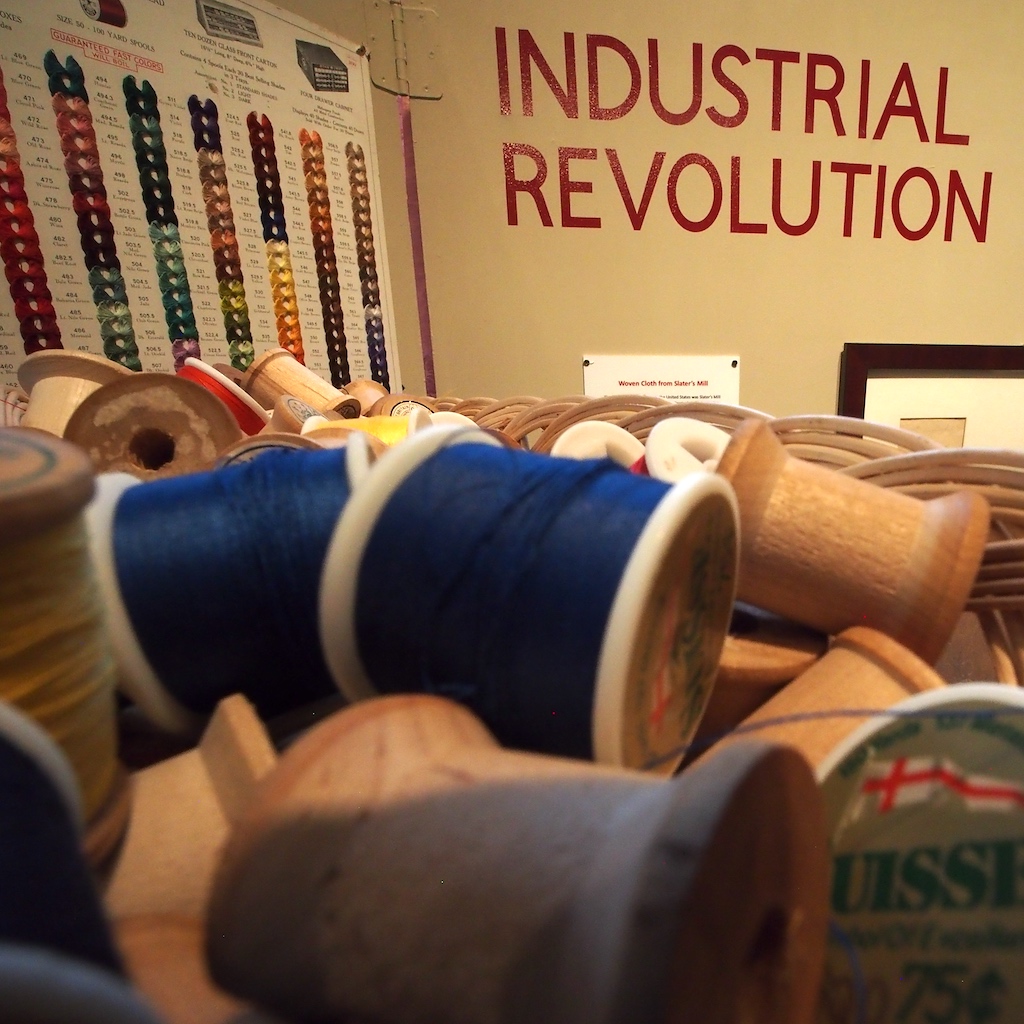
The new exhibit, Thread City: The Rise and Fall of the Connecticut Textile Industry, takes up about half the room, about 740 square feet. “This is an exhibit that we have wanted to create for a long time,” said Eves. “It serves as an introduction to the Museum, summarizing our story and providing context for all of our other exhibits.” Thread City is divided into five charettes. The first, “Age of Homespun,” introduces visitors to how people in Connecticut made textiles—thread and cloth—before 1793, when the American Industrial Revolution began. “It features a lot of interesting preindustrial technology,” said Eves, “but the central piece is a working eighteenth-century barn loom.” Volunteer weavers and carpenters, led by weaver Peggy Church, reassembled the loom, replacing some of the parts. Then, Church and other weavers dressed the loom 1700s-style and have been weaving on it. Other charettes examine the advent of industrialization; the role of labor; the building of industrial communities; and, finally, the decline of the industry in the twentieth century. The entire exhibit is built out of artifacts owned by the Museum, which have mostly been in storage.
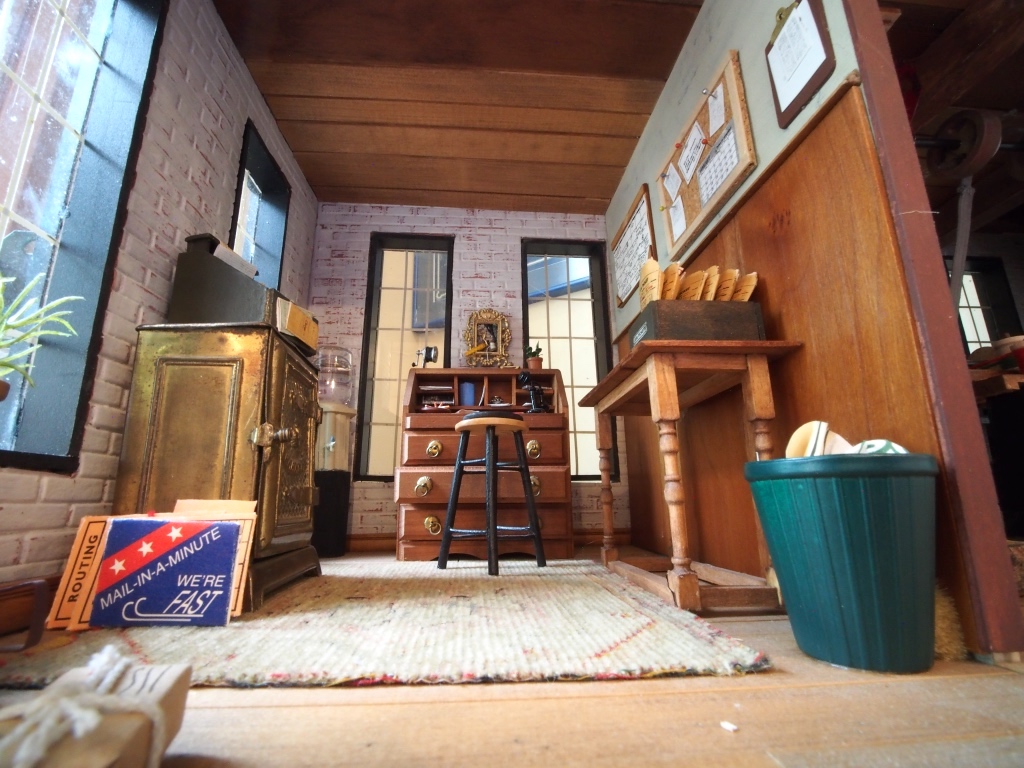
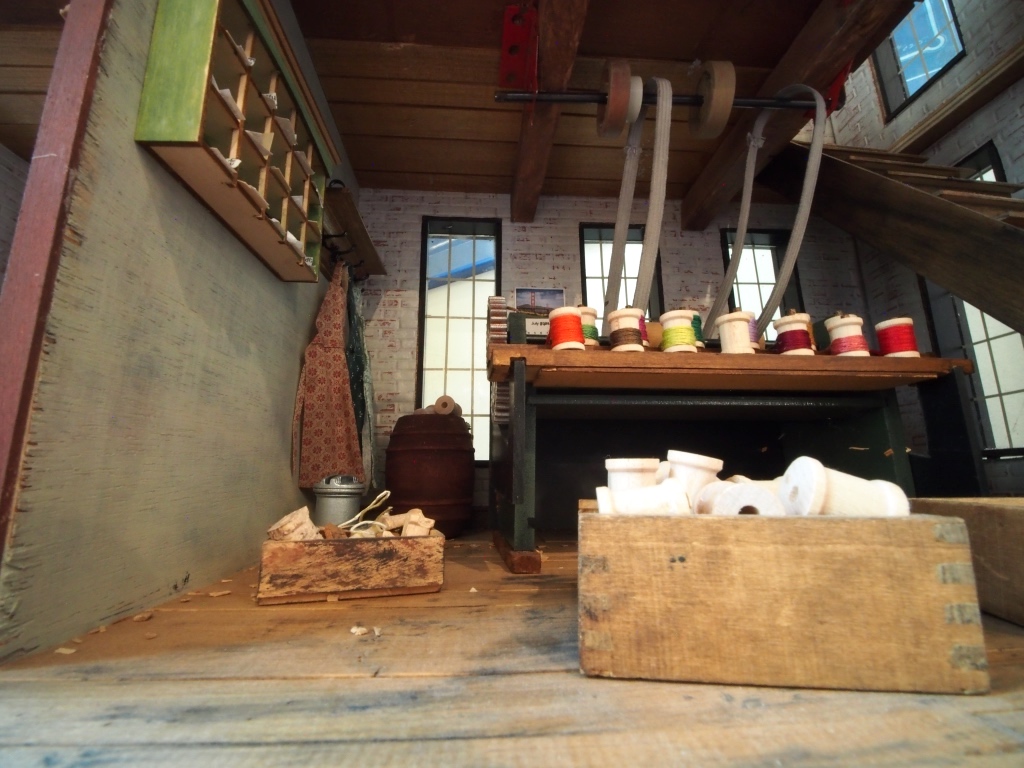
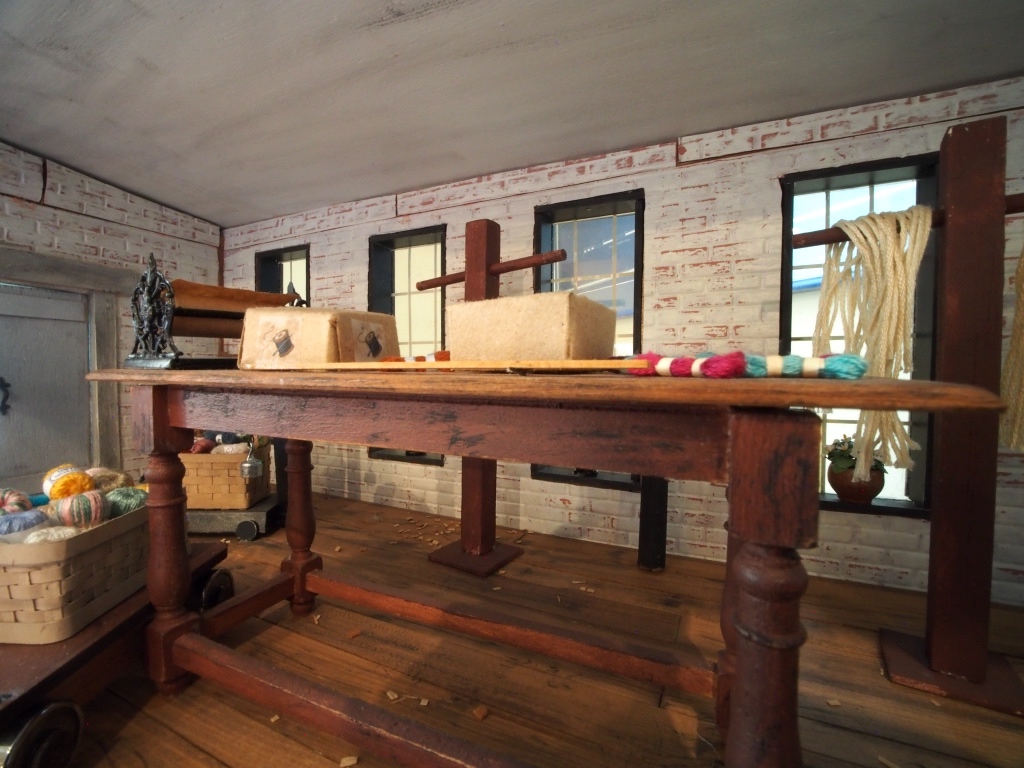
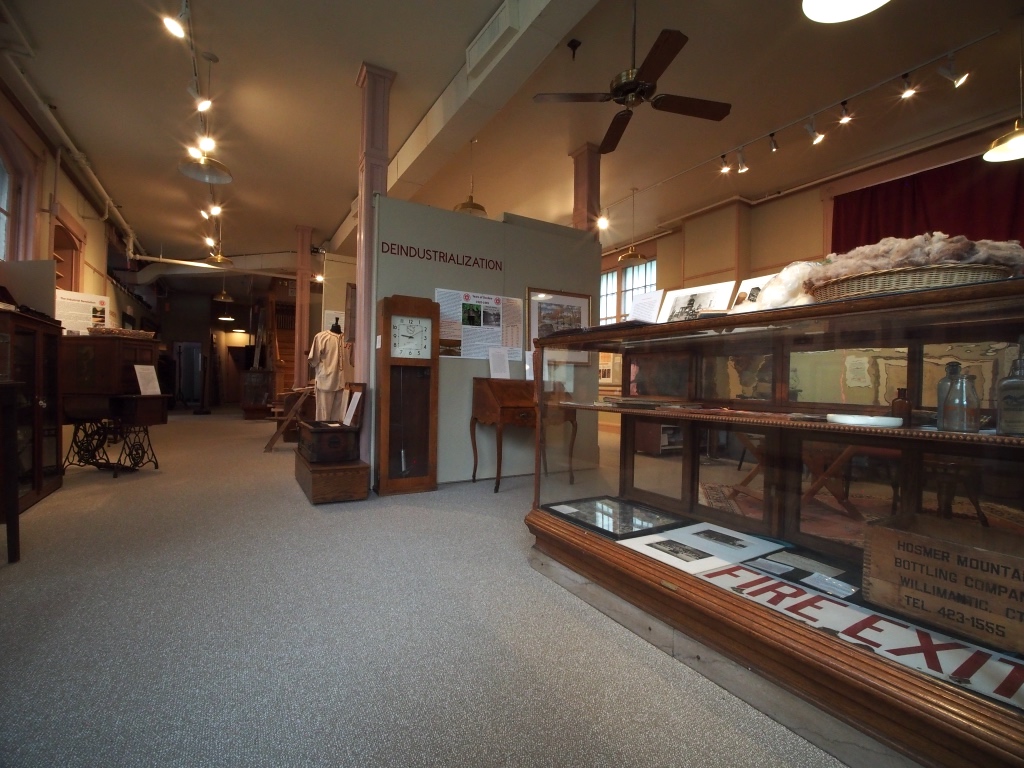
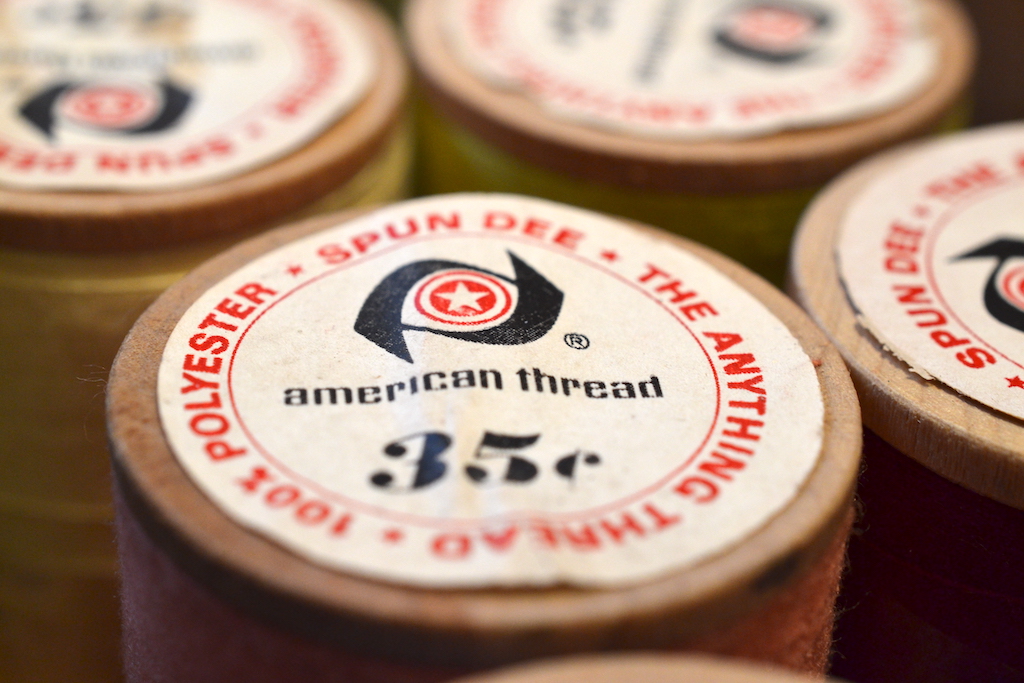
“It’s what I call a ‘discovery’ exhibit,” said Eves. “Visitors walk through the exhibit in chronological order, taking a trip through time, encountering artifacts that tell stories about how people used to live, what they accomplished, and why it all went away. It’s not just random stuff in glass cases. Each artifact tells a story, and the stories are all connected.” Notable artifacts include an elegant, handmade desk that may have been brought to Connecticut by a Habsburg duke who, after World War I, worked at the American Screw Company as a factory hand; an award-winning diorama of an early 1800s cotton mill; a baseball uniform worn by a turn-of-the-century major leaguer who later played and coached in Connecticut’s industrial leagues; a union charter; a machine fixer’s tool chest; an elegant thread case; several vintage industrial products (clocks, sewing machines, thread, etc.), solid “sad irons,” and more. “The artifacts on display are just a representative sample of objects in the Museum’s collection,” Eves said.